Publishing Guide
How to Publish a Book: Choose the Right Route
Publishing starts before you upload a file or approach an agent. First, make sure the manuscript is genuinely ready. Then choose the route that matches your goals, budget, timescale and appetite for control.
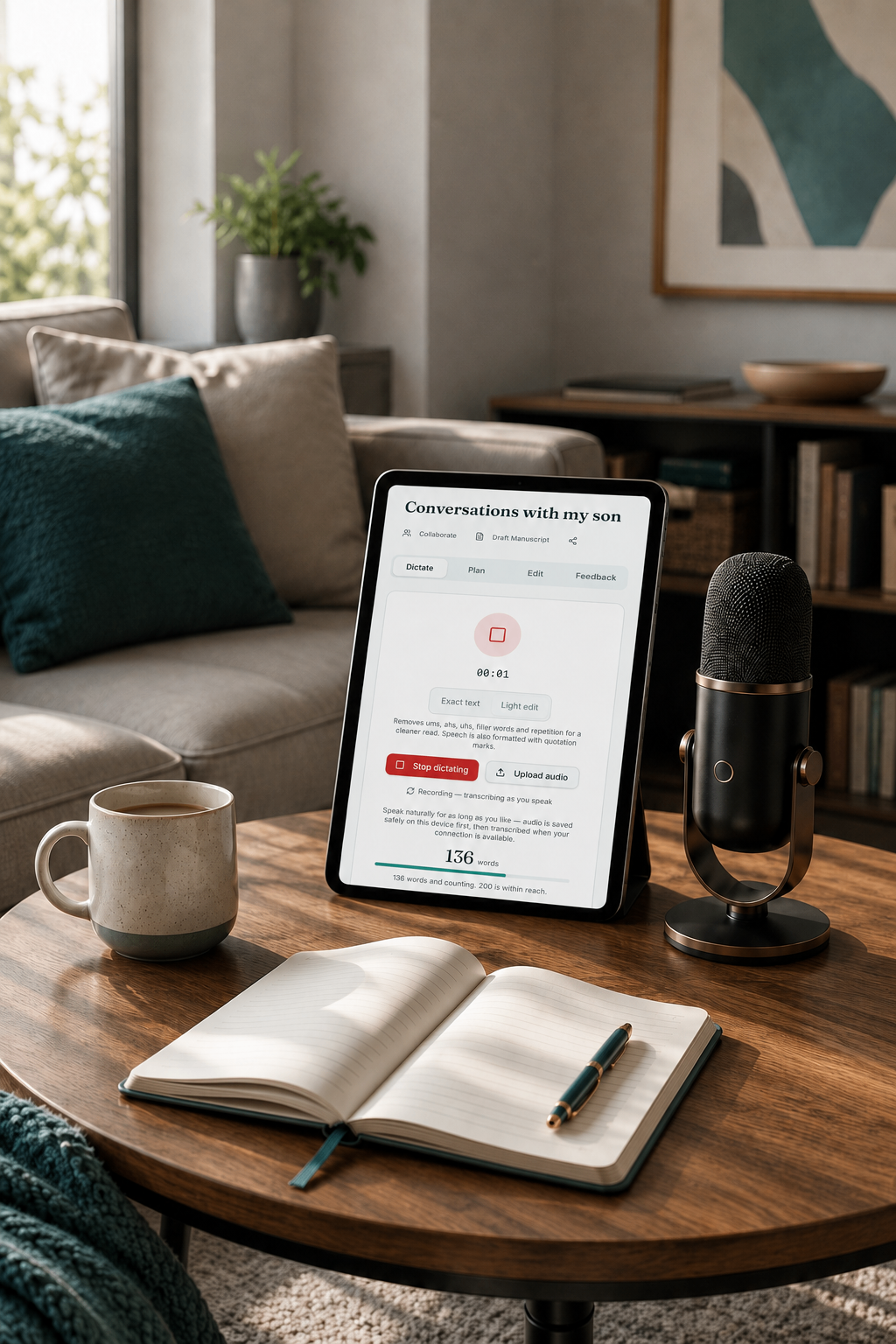
Speak, shape and assess your manuscript before spending heavily on publishing services.
Traditional publishing
The usual route is a literary agent first, then a publisher. Some independent and specialist publishers accept direct submissions, but agent representation is normal in most fiction and much general non-fiction.
A typical query package may include a query letter, a synopsis, an author biography, comparable titles and sample chapters. Non-fiction proposals often need a clear audience, a market case, a chapter outline, evidence of author platform and sample material before the full manuscript is complete.
In return, a traditional publisher may offer an advance against royalties, editorial input, cover design, sales and distribution, publicity support and access to trade reviewers and booksellers. In exchange, the author licenses specific rights - print, ebook, audio, translation, territory and adaptation rights - and the publisher usually controls timing, price, cover and format decisions.
Timescales are long: querying may take months, and a deal-to-shelf timeline of 12-24 months is common. Rejection may reflect list fit, timing or market conditions rather than manuscript quality - reputable agents do not charge upfront reading or representation fees.
Before signing anything, make sure you understand exactly which rights are being licensed, the territories, the term, the royalty rates and how they are calculated, and any reversion or out-of-print clauses. When in doubt, get a publishing lawyer or a reputable authors' society to review the contract.
Not sure which route suits your book?
Your Book Pro can assess your manuscript, identify what needs work and help you prepare for the route that fits your goals.
Self-publishing

Self-publishing gives you control over price, timing, cover, formats and rights. Uploading a file is easy; producing a professional book takes editing, design, metadata and quality control. Budget for the services you cannot perform well yourself, and treat yourself as the publisher - you own the decisions and the outcomes.
Platforms such as Amazon KDP, Apple Books, Kobo, Google Play, Barnes & Noble Press and wholesale distributors including Draft2Digital and IngramSpark cover most global sales channels. Print-on-demand reduces inventory risk, but each format - ebook, paperback, hardback, audiobook, large print, translation - is a separate production decision.
A ten-stage self-publishing workflow
- Assess the manuscript honestly.
- Complete structural and developmental editing.
- Copy-edit and proofread.
- Prepare the cover and interior design.
- Write the title, subtitle, description, author biography and metadata.
- Decide formats, ISBN arrangements and territories.
- Upload files and order or inspect proofs.
- Choose distribution channels.
- Plan the launch and early reviews.
- Monitor sales, correct problems and update editions.
Metadata is marketing. Your title, subtitle, contributors, categories, keywords, description and cover readability at thumbnail size all shape discoverability. Platform fees, royalty rates and policies change - always confirm current terms on the provider's own help pages before relying on a specific figure.
Different formats and editions normally need distinct ISBNs. In the UK, ISBNs are issued through Nielsen; in the US, through Bowker (MyIdentifiers). An ISBN identifies a product - it does not protect copyright.
Disclose AI use correctly. Where a platform such as Amazon KDP requires you to declare AI-generated text or images, do so. AI-assisted work - where AI helps you refine, edit or brainstorm content you created - generally does not require disclosure. When in doubt, follow the platform's current content guidelines.
Concierge, supported or hybrid
Concierge, supported and hybrid publishing services sit between traditional and self-publishing. They may act as project managers, service providers or full hybrid publishers that share revenue. Genuine services are transparent about fees, rights, royalties, timelines and exactly what they will do. Vanity publishing dressed up as hybrid publishing is not.
A reputable service may coordinate editing, proofreading, cover and interior design, ISBNs and metadata, file conversion, printing and distribution, launch support and project management. What matters is who owns the files, the rights and the sales account - and whether distribution is real or nominal.
Questions to ask before paying
- Exactly what work is included?
- Who owns the files, ISBN and publishing account?
- Which rights does the author retain?
- How are royalties calculated and paid?
- Is distribution genuinely available to retailers, or is the book merely listed?
- Are editing and design samples available?
- Are marketing claims specific and realistic?
- Are there compulsory print orders or extra charges?
- What happens if the author wants to leave?
- Is publication or sales success being misleadingly guaranteed?
Printing your own copies
Publishing and printing are not the same thing. You can print real, professionally bound copies of your book without publishing it at all - for family, for a launch, for readers you already have, or simply to hold the finished thing. Many authors print a proof copy first, because mistakes are far easier to see on paper than on screen.
Your Book Pro can generate printer-ready interior and cover files from your finished manuscript, check them against the printer's requirements, and order short runs of 1-50 private copies. You choose a trim size in the Prepare stage, and the files are built to match.
All routes need the same foundations
Whichever route you choose, you still need:
- A complete and coherent manuscript
- Appropriate editing and proofreading
- A clearly defined reader
- A strong title and description
- A professional cover
- Accurate metadata
- Permissions for material you do not own
- Secure backups and version history
- A realistic launch and marketing plan
Publishing-readiness checklist
- Is the manuscript complete?
- Has its structure been tested?
- Has someone assessed it critically?
- Is the intended reader clear?
- Can the author explain why this book should exist?
- Are the title, pitch and comparable books convincing?
- Is the chosen publishing route financially realistic?
This guide is a decision framework, not legal, tax or contractual advice.
Before you publish, make the manuscript ready.
Speak your ideas, shape your chapters, receive candid editorial guidance and prepare a clean manuscript before approaching agents or paying publishing providers.