For families, teachers & young authors
Kids Write Books Too!
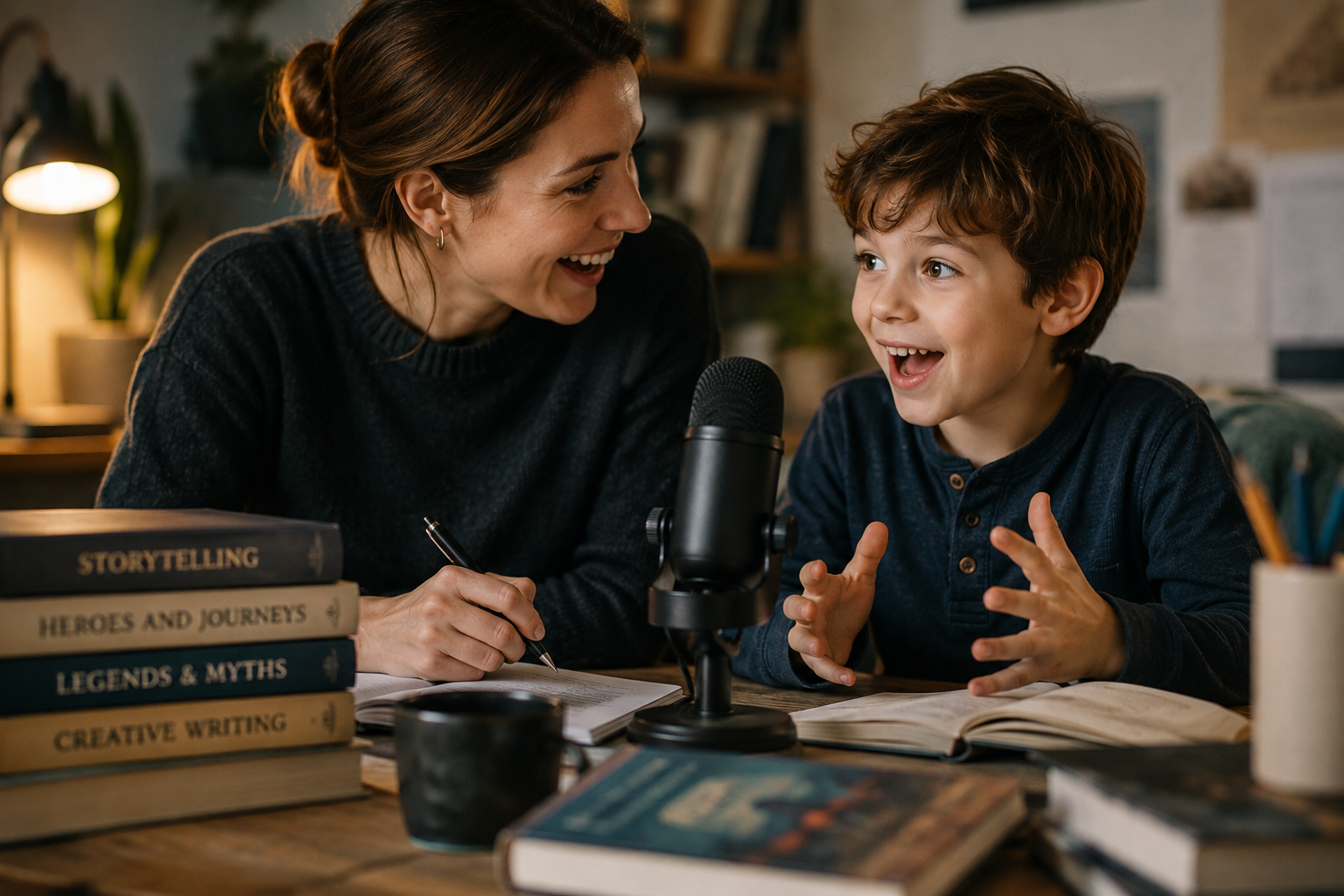
Children already tell stories.
They invent imaginary worlds, retell family holidays, explain everything they know about dinosaurs, create superheroes, make up jokes and ask questions that no adult would ever think to ask.
So why shouldn't they write books too?
Creating a book can be a wonderfully fun activity for a child to enjoy alone, with friends, with a parent or grandparent, or as part of a class. It gives their imagination somewhere to go and turns their ideas into something real that they can share, illustrate and proudly call their own.
With Your Book Pro, children do not have to begin by staring at a blank page. They can speak their ideas instead of typing, choose the kind of book they want to create, upload their own pictures and build their book step by step.
The child remains the author. Your Book Pro simply helps them capture, organise and develop what they create.
Ready to help a young author get started?
Why writing a book is so much fun
Writing a book does not have to feel like homework.
A child's book can be strange, funny, exciting, silly, thoughtful, factual or completely unexpected. It can be five illustrated pages or the beginning of an enormous adventure.
The child gets to make the decisions:
- Who is the hero?
- Where does the story happen?
- Can animals talk?
- What happens when the family reaches the airport?
- What is the world's most dangerous dinosaur?
- Could their younger brother survive a journey into space?
- What secret is Grandma hiding?
- How should the book end?
There is no single correct answer.
That freedom is what makes book creation such a powerful activity. Children are not just completing an exercise. They are making something that belongs to them.
They can choose a title, invent characters, design a cover, add drawings, divide the story into chapters and share the finished result with people they care about.
Even children who do not think of themselves as "writers" may discover that they love being storytellers, illustrators, interviewers, researchers or inventors.
Book ideas children can try
Children do not need to begin with an epic novel. The best first book is often based on something they already enjoy talking about.
Here are some ideas to help them get started.
Write a short novel
Children can invent a character, give them a problem and decide what happens next.
Their book might be:
- a mystery at school;
- an adventure in a magical world;
- a funny story about an unusual pet;
- a ghost story;
- a superhero adventure;
- a science-fiction journey;
- a story about friendship;
- or a tale in which an ordinary child has to do something extraordinary.
A short novel can begin with only three questions:
- Who is the story about?
- What do they want?
- What gets in their way?
Create a travel book
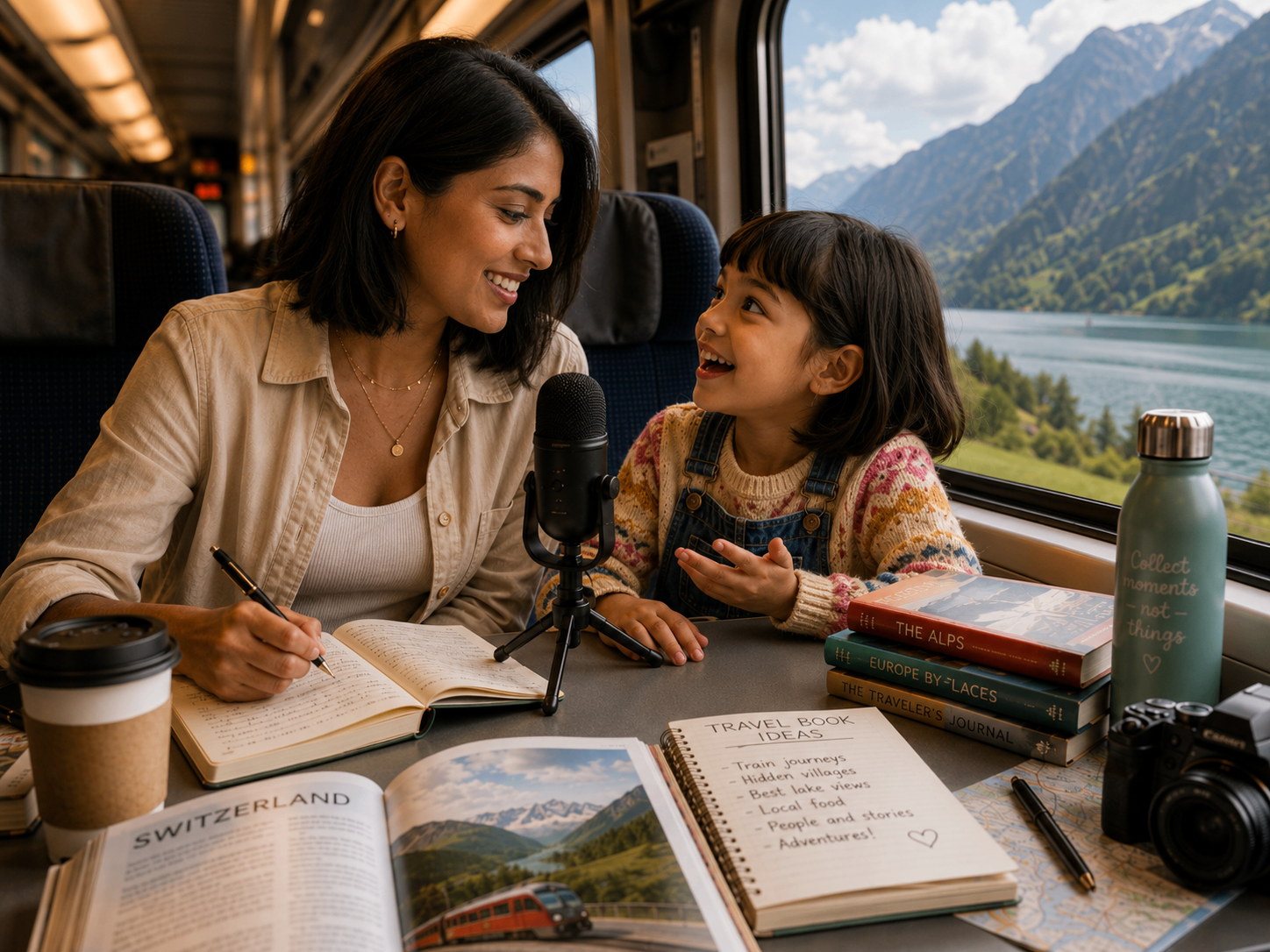
A family holiday can become a real travel book.
Children can record where they went, what they saw, what surprised them and which places they would recommend to another child.
They could include:
- funny moments from the journey;
- favourite foods;
- maps and drawings;
- photographs;
- reviews of attractions;
- unusual facts;
- a holiday diary;
- and advice for other families.
A weekend away, school trip, visit to grandparents or day at the seaside can all become a book.
Write a picture book for a younger child
Older children can create a story especially for a younger sibling, cousin or pupil.
Writing for a younger reader encourages them to think carefully about:
- simple language;
- repetition;
- memorable characters;
- page-by-page storytelling;
- illustrations;
- and a satisfying ending.
Reading the finished book aloud to its intended audience makes the project even more rewarding.
Interview a parent or grandparent
A child can become a family historian.
They might ask an adult about:
- what school was like when they were young;
- their funniest childhood memory;
- a journey they remember;
- games they used to play;
- a difficult moment they overcame;
- family traditions;
- or what the world was like before the child was born.
The recordings can become a short biography, family history or collection of memories.
Make an expert guide
Children often know an extraordinary amount about the subjects they love.
They could create:
- a dinosaur guide;
- a book about football;
- a guide to caring for a pet;
- a history of space travel;
- a wildlife book;
- a gaming guide;
- a book of science experiments;
- or an introduction to their favourite hobby.
Explaining something to another reader helps children decide what information matters and how to present it clearly.
Create a class book
A class can work together on one larger project.
Each child might contribute:
- a story;
- a poem;
- an illustration;
- a factual page;
- an interview;
- or one chapter of a shared adventure.
Possible class projects include:
- a guide to the local area;
- a history of the school;
- an anthology of poems;
- a collection of traditional stories;
- a class cookbook;
- a nature diary;
- or a book for younger pupils.
Make a book with a friend
Two or more children can plan and create a book together.
One child might invent the characters while another develops the plot. One might dictate the story while another creates the illustrations. Friends can write alternating chapters or each tell the story from a different character's point of view.
Creating together makes book writing social, imaginative and fun.
Try a different kind of book
Children can also experiment with:
- poetry collections;
- comic books;
- graphic novels;
- joke books;
- cookbooks;
- plays;
- diaries;
- biographies;
- "choose what happens next" adventures;
- fact books;
- and collections of short stories.
There is no single way to be an author.
Writing books together
A child's book can become a shared activity without the adult taking control of it.
Parents and children
A parent can help the child talk through an idea, ask questions, listen to recordings and celebrate each completed section.
This can be a relaxed weekend activity, a school-holiday project or something the family develops for ten minutes at a time.
Grandparents and grandchildren
A grandparent and grandchild could create:
- a family history;
- a collection of childhood memories;
- a fictional adventure;
- a book of family recipes;
- or a record of the places they have visited together.
The child can act as interviewer, writer and illustrator while the grandparent provides stories and memories.
Brothers, sisters and friends
Children can invent a shared world, create different characters or take responsibility for separate parts of the book.
Collaborative storytelling also gives children practice in listening, negotiating and developing someone else's idea.
Teachers and classes
Teachers can use a book project to bring together speaking, listening, reading, writing, research, art and group work.
A class book also gives pupils a genuine audience. They are not writing only for the teacher: they are creating something that can be shared with families, younger classes or the wider school.
Why book writing is good for children
The first reason to create a book is simple: it is enjoyable.
But while children are having fun, they are also developing valuable skills.
It gives children ownership
A book belongs to its author.
Children choose the subject, characters, illustrations and direction of the project. That sense of control can make them more motivated to continue and improve their work.
It develops imagination
Creating a story requires children to invent possibilities, imagine consequences and solve problems.
What happens next? Why did the character make that decision? How can they escape? What has the reader not yet discovered?
It builds confidence
Finishing even a short book gives a child something tangible to celebrate.
It shows them that their voice, knowledge and imagination are worth sharing.
It encourages communication
Children must think about what their reader knows, what needs explaining and what will keep the reader interested.
That helps them develop clarity, sequencing and awareness of an audience.
It makes reading more interesting
Creating a book can change the way children read other books.
They begin to notice how authors:
- start stories;
- introduce characters;
- build suspense;
- organise information;
- use illustrations;
- and create satisfying endings.
It gives editing a purpose
Editing can feel frustrating when it is simply presented as finding mistakes.
It feels different when a child understands that a clearer sentence, stronger opening or better ending will make their own book more enjoyable for its reader.
How adults can help without taking over
The adult's role is to encourage the child, not to rewrite the book for them.
Be an interested listener
Children often discover their best ideas by talking.
Ask them to explain:
- who the book is for;
- what it is about;
- which part they are most excited by;
- and what they think should happen next.
Ask questions instead of providing answers
Helpful questions include:
- What does your character want?
- What goes wrong?
- How does the character feel here?
- What can the reader see or hear?
- What happened before this?
- What does the reader need to understand?
- Which part would you most like to illustrate?
- Is there anything missing from the ending?
Questions help the child find their own solution.
Capture the idea before correcting it
Try not to interrupt every sentence to correct grammar, spelling or punctuation.
Let the child finish telling the story first. There will be time to improve the written version later.
A useful order is:
- Tell the story.
- Organise the ideas.
- Develop one section.
- Read it aloud.
- Edit and proofread it.
Focus on one improvement at a time
Too many corrections can make a child feel that nothing they created was successful.
Choose one manageable area, such as:
- making the setting clearer;
- checking character names;
- improving the opening;
- adding paragraph breaks;
- choosing stronger verbs;
- or checking speech punctuation.
Help with practical tasks
Adults can help children:
- photograph and upload drawings;
- scan artwork;
- check image permissions;
- arrange chapters;
- read difficult words;
- operate the microphone;
- and review the book's layout.
The ideas and words should still come from the child wherever possible.
Celebrate progress
Do not wait until the whole book is complete.
Celebrate:
- choosing a title;
- recording the first scene;
- completing a chapter;
- drawing the cover;
- solving a plot problem;
- or improving a difficult section.
A book is built through many small achievements.
Give their ideas somewhere to go
Your adult account lets you approve and support a child's free book project while retaining adult oversight.
Supporting the UK's world-leading Key Stage 2 standards
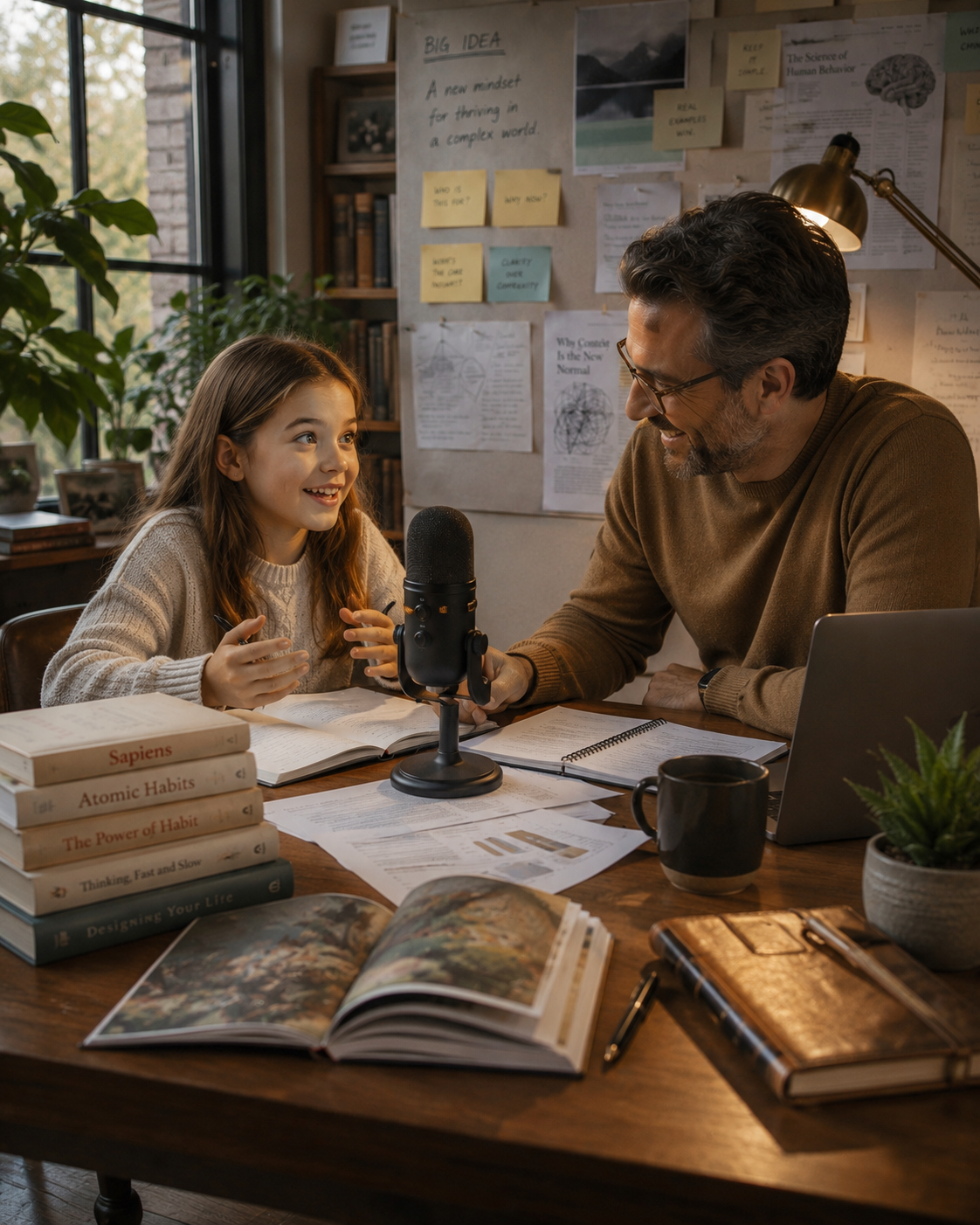
Your Book Pro is designed to be enjoyable for children wherever they live.
It also supports many of the skills recognised within the UK's world-leading Key Stage 2 English standards for children aged approximately 7–11.
The curriculum includes both transcription - such as handwriting and spelling - and composition, which involves developing, organising, expressing and improving ideas.
Your Book Pro is especially useful for supporting composition. It complements classroom teaching rather than replacing the essential teaching of handwriting, spelling, grammar and punctuation.
Speaking and oral rehearsal
Key Stage 2 children are encouraged to rehearse sentences and ideas orally.
Speaking before writing can help a child:
- hear how a sentence sounds;
- develop dialogue;
- find the right sequence;
- try different vocabulary;
- and work out what they want to say.
Your Book Pro allows that spoken rehearsal to become part of the book itself.
Planning ideas
Children can think about:
- their audience;
- the purpose of the book;
- characters;
- settings;
- plots;
- chapter order;
- research;
- and the information their reader needs.
The book format gives these decisions a meaningful context.
Drafting and organising
Children can build their work in chapters or sections rather than trying to create everything at once.
They can see how one idea connects with another and decide which information belongs together.
Revising and editing
Children are encouraged to review whether their writing works for its reader.
They can:
- add missing information;
- remove repetition;
- clarify confusing passages;
- improve vocabulary;
- strengthen openings and endings;
- and proofread the final text.
Your Book Pro's child-author guidance is intended to offer manageable, age-conscious support rather than overwhelming children with every possible correction at once.
Audience and purpose
A poem, travel guide, ghost story, autobiography and picture book all require different choices.
Selecting a type of book helps children consider:
- who will read it;
- what the reader expects;
- how formal or playful the language should be;
- what information to include;
- and how the book should make the reader feel.
Reading work aloud
Reading a chapter aloud is one of the most effective ways to review it.
Children often hear repeated words, missing explanations or unnatural dialogue more easily than they see them on a screen.
It also allows them to practise expression, tone, volume and communicating meaning to an audience.
Although curriculum terminology differs around the world, these skills - speaking, planning, creating, revising and sharing - are valuable to young writers everywhere.
Inclusive writing through dictation
Not every child finds handwriting or typing easy.
Some children have wonderful vocabulary, vivid imaginations and complex ideas but struggle to capture them on a page.
This may include children with:
- physical disabilities;
- motor-coordination difficulties;
- dysgraphia;
- dyspraxia;
- visual impairments;
- fatigue or pain;
- difficulties using a keyboard;
- or other additional learning needs.
Your Book Pro allows children to dictate their book aloud instead of having to type every word.
This can remove a significant barrier between the child and the story they want to tell.
The child can concentrate on:
- ideas;
- characters;
- description;
- explanations;
- plot;
- vocabulary;
- and communicating with the reader.
Their speech is converted into written text, which can then be reviewed and developed.
Dictation does not remove the value of learning handwriting, spelling and keyboard skills where these are appropriate for the child. Instead, it provides another route into composition and authorship.
It can help ensure that difficulty with handwriting does not prevent a child from taking part in an imaginative writing activity or showing what they are capable of creating.
For teachers, this can make a class book project more inclusive. Children can contribute through speaking, drawing, planning, researching or editing, even when producing a long handwritten piece would be difficult.
How Your Book Pro for Kids works
Your Book Pro helps children move from an initial idea to a structured book while keeping an adult connected to the project.
1. The adult creates or signs in to an account
A parent, guardian, teacher or other responsible adult needs a Your Book Pro account.
They can begin free with Plus or choose an annual Pro account.
The adult remains responsible for approving and overseeing the child's access.
2. The child starts from the Kids page
The child visits the dedicated Kids page and begins creating a book.
The experience is designed to feel welcoming and child-friendly rather than like a complex professional writing tool.
3. Adult permission is requested
A child's project cannot proceed independently without adult approval.
The responsible adult is asked to give permission before the child's book and access are activated.
This keeps the adult connected to the project from the beginning.
4. The child's access is free
The adult needs an account, but the child's own access is free.
The child's book does not use one of the books included in the adult account's normal book allocation. It is treated separately as a child-author project connected to the responsible adult.
5. The child chooses a type of book
Children can choose the kind of book they want to create.
Options can include:
- fiction;
- factual books;
- real-life stories;
- travel books;
- poetry;
- picture books;
- graphic novels;
- and other child-friendly formats.
A short set of questions helps the child think about their idea, audience, characters or subject.
6. They can speak instead of typing
Children can dictate their ideas directly into Your Book Pro.
Their speech is converted into text so they can focus on storytelling and creativity rather than having to type every sentence.
They can also type when they prefer or combine speaking and typing throughout the project.
7. They build the book step by step
The child can develop their idea into chapters or sections.
The Your Book Pro flow helps them move through stages such as:
- choosing the idea;
- answering questions about the book;
- planning what will happen or what it will explain;
- creating chapters or sections;
- reviewing the text;
- making improvements;
- and preparing a more complete book.
The child's ideas, voice and decisions remain central throughout.
8. They can upload their own pictures
Children can add:
- drawings;
- paintings;
- photographs;
- diagrams;
- maps;
- character designs;
- comic panels;
- and cover artwork.
Adults can help photograph or scan physical artwork before uploading it.
Any image that the child did not create should only be used when the family or school has permission to use it.
9. The adult receives a secure link
Once the project has been approved, a secure link is emailed to the responsible adult.
The adult can share this link with the child, allowing them to open their own book directly without having to search through the adult's account each time.
The adult therefore remains connected to the access process while the child has a much simpler route back into their book.
10. The book grows with the child
The project does not need to be completed in one sitting.
A child can return to:
- add another chapter;
- record a new idea;
- upload a drawing;
- improve a scene;
- or read part of the book aloud.
Their book can begin as a small project and grow whenever inspiration strikes.
Help a young author begin
Children do not need to wait until they are older to become authors.
They do not need perfect handwriting, an enormous vocabulary or a fully planned story.
They need an idea, encouragement and a way to begin.
Their first book might be:
- a five-page picture story;
- a holiday journal;
- a book about their favourite animal;
- a mystery written with a friend;
- a grandparent's childhood memories;
- a collection of class poems;
- or the opening chapters of an imaginary adventure.
What matters is that the child has created something, developed it and discovered that their voice can become a book.
Support a young author with Your Book Pro
Create an adult account, approve the child's free project and help them turn their spoken ideas, stories and pictures into a book of their own.
Their idea. Their words. Their pictures. Their book.