Writing advice
This Week on Substack
· Your Book Pro
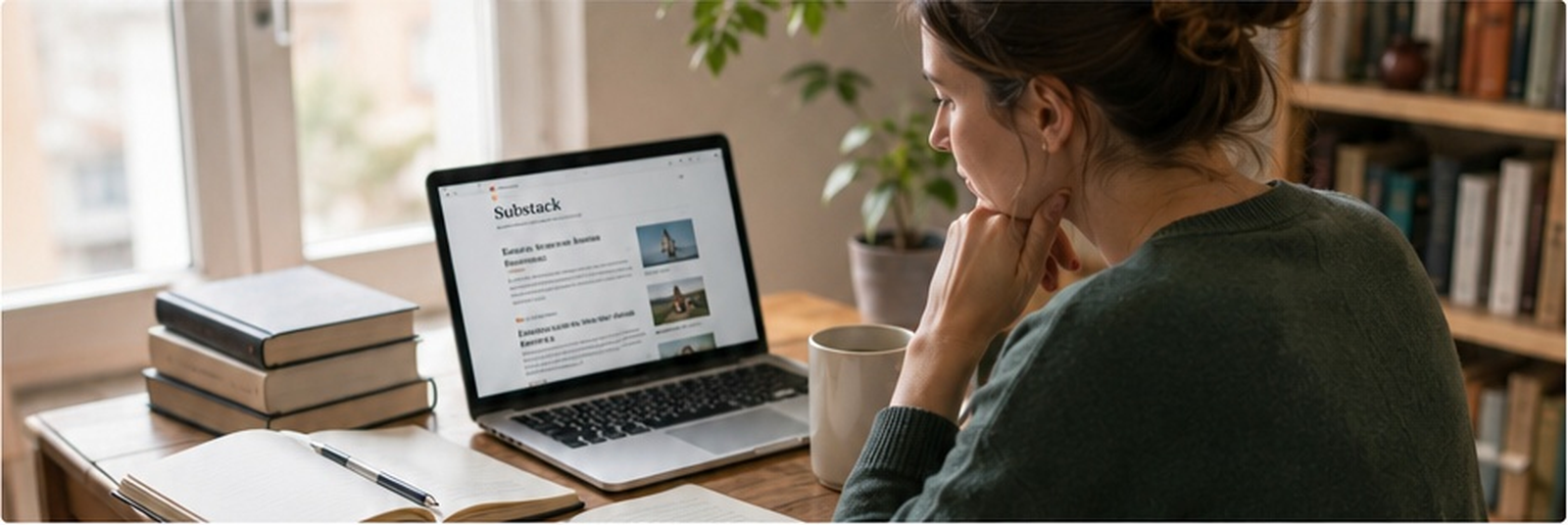
This week on Substack, one novelist wrote an entire first draft in pencil, another writer was worrying about being accused of using AI, a literary agent explained what makes her want to sign an author, and someone managed to start an argument about whether seaweed counts as food.
Which is quite a lot for one inbox.
The most interesting thread running through it all was not really about technology. It was about how writers remain recognisably themselves when the tools around them keep changing.
Rahul Bhattacharya gave perhaps the most extreme answer. In a Writers Online interview, he described writing the first draft of Rail Song by hand, using 2B pencils and yellow legal pads. The point was not nostalgia. He wanted to remove digital distraction.
There is something wonderfully stubborn about responding to the age of generative AI by sharpening a pencil.
Yet elsewhere on Substack, writers were dealing with the opposite problem. Slow AI highlighted the increasingly strange situation in which authors may have to prove that work really is theirs. The Weekly Stack also pointed readers towards Madelyn Knecht, who explored the same anxiety.
That makes authorship feel less like a philosophical question and more like something writers may increasingly need to demonstrate through drafts, notes, revisions and a visible creative process.
Oddly enough, that brings us back to the pencil.
Whether you draft on a legal pad, dictate into your phone or type directly into a manuscript, the valuable thing is not the tool. It is the trail of human decisions that turns an idea into a book.
Dominic de Souza approached the AI debate from another direction, arguing that creators should learn to use new technology critically rather than simply rejecting it. His piece is deliberately provocative, but one line of thought stood out: tools should serve human creativity rather than replacing the person doing the creating.
That feels increasingly important because Substack’s own Weekender was simultaneously worrying about the opposite problem: a web full of templates, identical carousels and content where everybody suddenly looks like the same designer.
If everyone has access to the same tools, polish stops being the differentiator.
Voice becomes the differentiator.
That connects neatly to Ian Ayris’s latest Writers Online piece, which returned to first-person point of view. His camera analogy remains useful: put the camera inside the character’s head and the world is filtered through one particular human being.
Not a voice. Their voice.
And once you have that voice, structure still matters. Abigail Fenton tackled flashbacks this week, including the wonderfully specific example of a former gymnast whose childhood competition either matters enormously to the present story or really does not need three pages of retrospective gymnastics.
Her broader point is useful beyond fiction. Just because something happened does not mean it belongs in the book.
Memoir writers know this problem. Podcasters converting years of conversations into a manuscript know it too. The source material can be fascinating and still be irrelevant to the book you are actually making.
Then there was the week’s best publishing reality check. Substack recommended literary agent Stephanie Katz’s piece on the five green flags that make her want to sign an author. It is a useful reminder that getting noticed is not only about producing beautiful sentences. Agents are looking at the author behind the manuscript too.
Which may explain why the week’s funniest detour also felt strangely relevant.
Substack’s Weekender featured food writer Emiko Davies responding to a journalist who had questioned whether seaweed was even food and declared Japanese curry the worst curry in the world. Her response ranged through British naval history, beriberi, ancient diets and thousands of years of people quite happily eating seaweed.
The lesson for writers is perhaps accidental but excellent:
Have an opinion. But for goodness’ sake, do your research.
Taken together, this week’s reading suggests a fairly good recipe for writing a book in 2026.
Use whatever tool helps you begin. Keep the human voice. Save the evidence of your process. Cut material that does not serve the story. Research before making sweeping claims. And remember that technology can make producing words easier, but it cannot decide which words are worth keeping.
That is exactly the distinction Your Book Pro is built around.
You can speak, type or upload the raw material. Your Book Pro can help you shape it, question it, improve it and prepare it. But the book remains yours.